
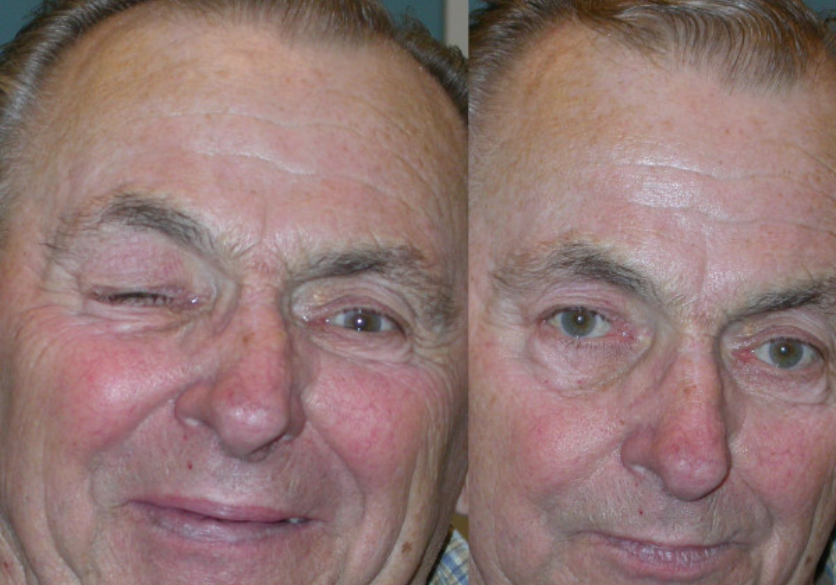
Hemifacial Spasm
Usually beginning in your 40s to 60s, hemifacial spasm is a rare condition in which the muscles on one side of your face twitch uncontrollably. Over time, these spasms get progressively worse. It affects the peripheral nerves and is more common in women. It’s also known as involuntary facial movements.
Symptoms of Hemifacial Spasm
-
Progresses to stronger spasms affecting the eyebrow, mouth, and lower face.
-
May involve nearly constant one-sided facial spasms, though they’re not painful.
-
Starts with eyelid twitching that comes and goes, usually on one side of the face.
-
Stress, fatigue, and anxiety worsen symptoms, and spasms may continue during sleep.
How is hemifacial spasm treated?
-
Possible Botox side effects include eye irritation, eyelid drooping, and temporary facial weakness.
-
Surgery can be effective but carries risks such as anesthesia reactions, facial nerve issues, hearing loss, or CSF leakage.
-
Surgery (microvascular decompression) is the only permanent solution, used when symptoms are severe or Botox doesn’t help.
-
Oral medications like anticonvulsants, benzodiazepines, and muscle relaxants may reduce spasms but can cause sedation and fatigue.
-
Botox injections are the most common treatment, relaxing the overactive facial muscles; results appear in a few days and last 3–4 months.